Jharna-Kala:
Fountain-Art
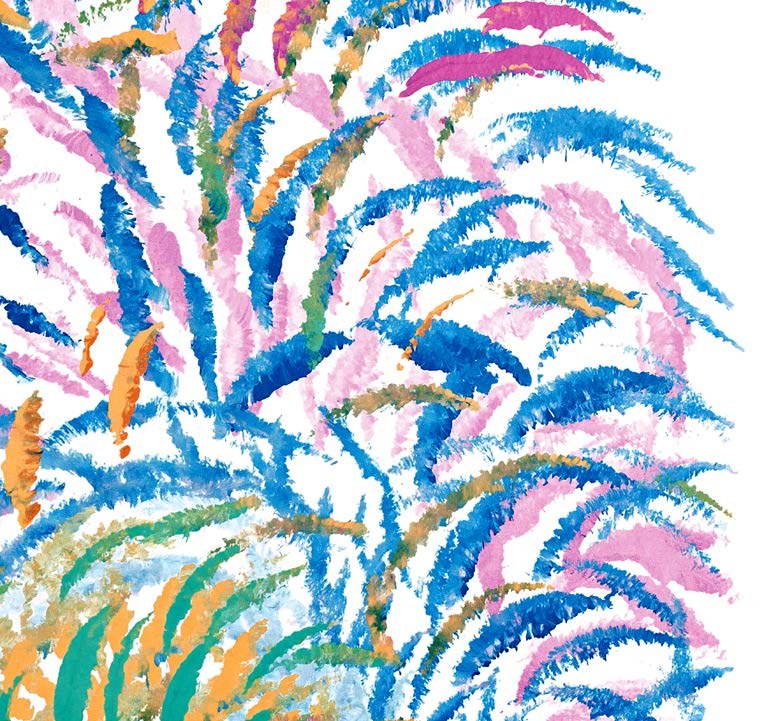
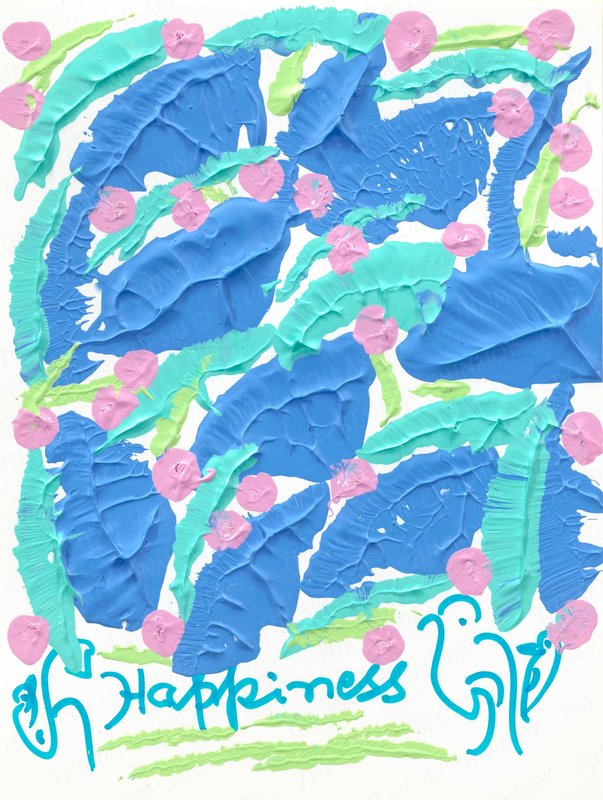
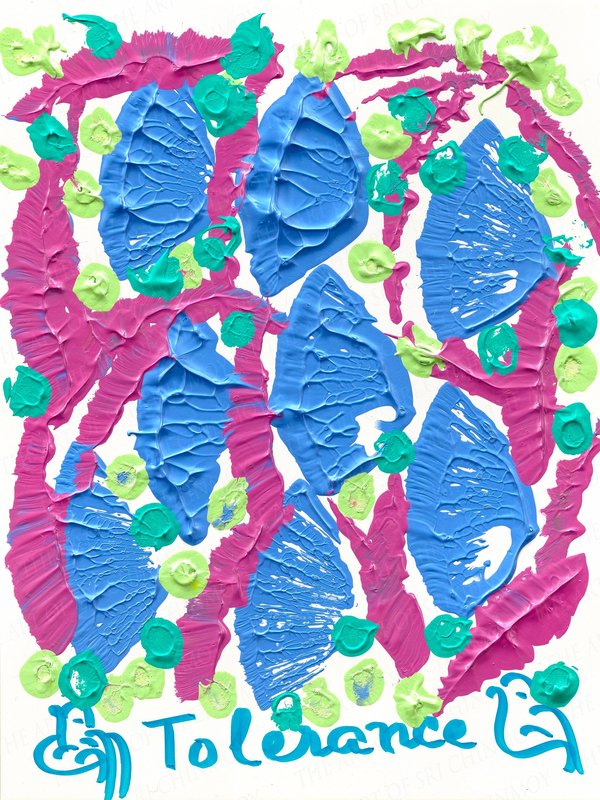
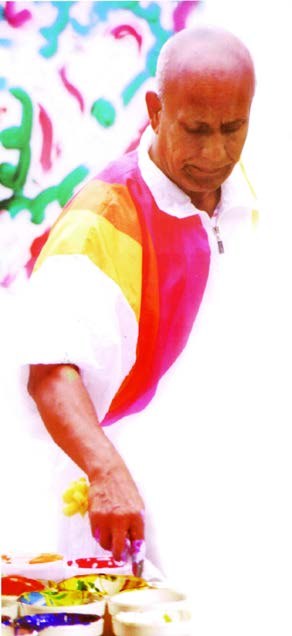
Sri Chinmoy called his art “Jharna-Kala”, meaning “Fountain-Art”. In his paintings, Sri Chinmoy allowed a stream of creative energy arising from his heart to flow freely. Feelings of peace, harmony, childlike joy and purity found expression in richly applied colours and dynamic strokes that speak directly to the senses.
obchod
obchod Jharna-Kala
The Contemplative Art of Sri Chinmoy
About the Artist
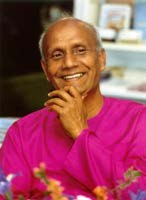
Sri Chinmoy, born Chinmoy Kumar Ghose, was born in 1931 in what was then East Bengal. From 1964 until his passing in 2007, he lived in New York. His prolific and multifaceted life embraced visual art, music and poetry, as well as numerous international cultural, sporting and humanitarian projects.
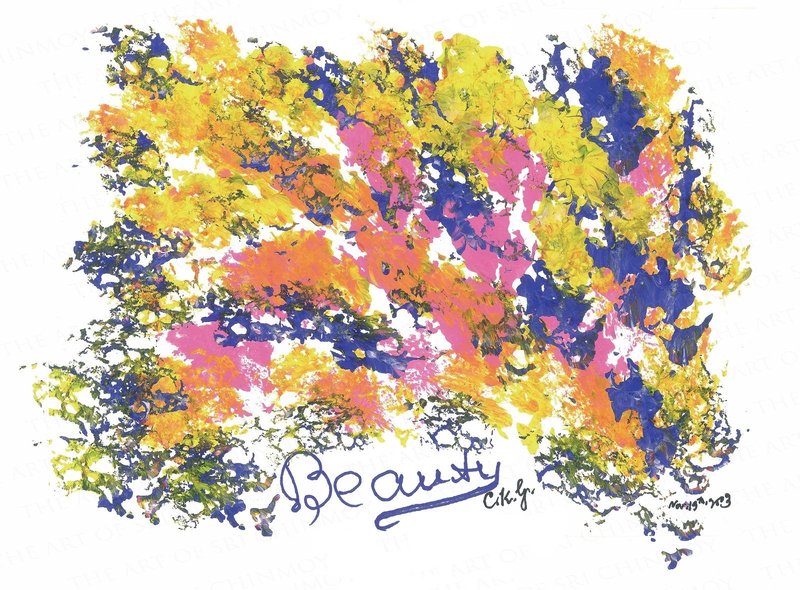
Sri Chinmoy called his art “Jharna-Kala”, meaning “Fountain-Art”. In creating his meditative acrylic abstractions and Zen-like, playful drawings of birds—a key motif in his work—Sri Chinmoy employed a wide range of techniques, from inks on handmade paper, watercolours and gouache on watercolour paper to pastels and calligraphic markers. He also fashioned a variety of his own painting tools, whose unconventional use gives his works their distinctive style. His strokes are executed with both lightness and boldness, evident in their forms as well as in his handling and blending of colour.
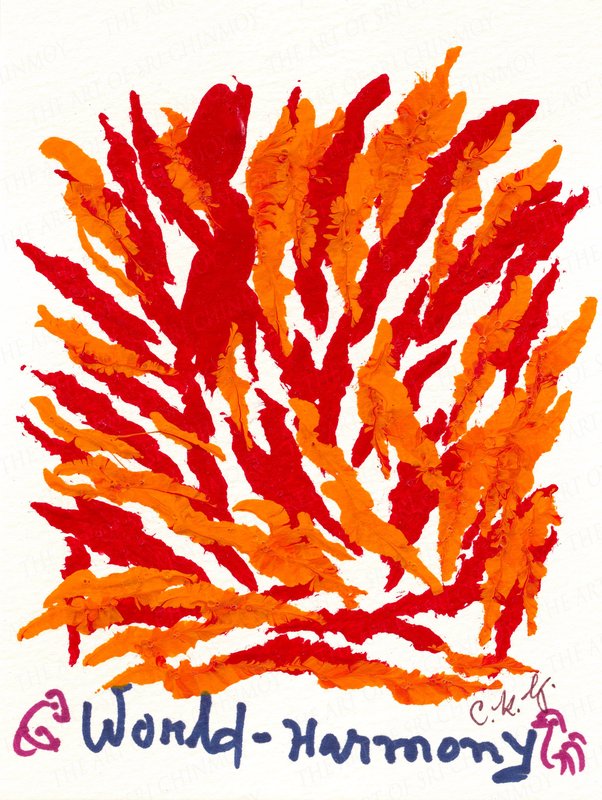
Sri Chinmoy’s art demonstrates a masterful ability to communicate with the viewer—through colour, technique and, above all, the striking originality of his style. He felt no need to identify with a particular school of art or to define himself in opposition to any artistic movement; instead, his work captures a completely spontaneous form of artistic expression. In his paintings, Sri Chinmoy allowed a stream of creative energy arising from his heart to flow freely. Feelings of peace, harmony, childlike joy and purity found expression in richly applied colours and dynamic strokes that speak directly to the senses.
There can be little doubt that the foremost message of Sri Chinmoy’s art is a longing for peaceful coexistence and harmony—with the viewer and with the world around us.
Ranjana K. Ghose, curator
Jharna-Kala Art Foundation
The Source of Creativity
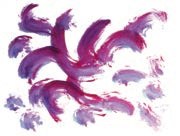
“When I draw, I have nothing in mind. I try to keep my mind as empty, vacant and tranquil as possible. The outer mind is like the surface of the sea. On the surface, the sea is full of waves and surges; it is all restlessness. But when we dive deep below the surface, the same sea is all peace, calmness and quiet, and there we find the source of creativity.”
A selection from Sri Chinmoy’s earlier exhibitions
- 1975
- United Nations Secretariat Building, New York, U.S.A.
- 1976
- Carnegie Hall, New York, U.S.A.
- 1978
- Harvard University, Massachusetts, U.S.A.
- 1980
- National Gallery, Ottawa, Canada
- 1982
- Tour of Jharna-Kala exhibit chosen by Henry Geldzahler, Curator of 20th Century Art of the Metropolitan Museum of Art, NYC
- 1992
- L’Espace Miro, UNESCO, Paris, France
- Commonwealth Institute, Edinburgh, Scotland
- 1995
- Parliament House, Canberra, Australia
- 1997
- Cambridge Central Library, Cambridge, England
- 1998
- Il Saggiattore, Rome, Italy
- 1999
- Empire State Building, New York, U.S.A.
- 2001
- United Nations Secretariat Building, New York, U.S.A.
- City Hall, Oslo, Norway
- John F. Kennedy International Airport, New York, U.S.A.
- Mall Gallery, London
- 2004
- Agung Rai Museum, Ubud, Bali, Indonesia
- Diaghilev Art Centre, for the Museum of Modern Art at the Smolny Institute of Free Arts and Science, St. Petersburg
- 2005
- Carrousel du Louvre, Paris, France
- Künstlerhaus, Vienna, Austria
- 2006
- UNESCO, Paris, France
- Carrousel du Louvre, Paris, France
- Galerie MIRO, Prague, Czech Republic
- 2007
- United Nations Secretariat Building, New York, U.S.A.
- 2008
- European Parliament, Brussels, Belgium
Permanent exhibitions
Among the many respected cultural institutions that have included Sri Chinmoy’s original works in their permanent collections are:
- The Victoria and Albert Museum in London, United Kingdom
- UNESCO in Paris, France
- Palais des Rois de Majorque in Perpignon, France
- Agung Rai Museum of Art in Ubud, Bali, Indonesia
Contact
Art for Peace artforpeace@centrum.cz tel. 733 734 915